
Community participation is the living pulse of PICS. PICS Volunteers, professionals, volunteers, and service providers will be empowered to shape decisions. This allows stakeholders to directly influence policies regarding:
Through continuous feedback and participatory deliberation, the ecosystem remains dynamic, responsive, and co-owned by those who sustain it.
The hybrid model ensures that top-down oversight and bottom-up participation coexist harmoniously: While the PICS Trust maintains global standards, local governance nodes, validation networks, and user communities ensure that grassroots realities inform global policy. This equilibrium guarantees:
Transparency in reporting and accountability in structure build trust across all levels, between PICS Organizations, Service Providers and Volunteers, between institutions an citizens and between service and society.
PICS governance is not merely administrative, it is evolutionary. It seeks to prove that technology, ethics, and empathy can coexist in a self-regulating system of global cooperation. By blending human judgment with algorithmic fairness, individual spirit with institutional discipline. PICS establishes a living model of governance by conscience, a template for how humanity can manage shared value in the era beyond money and also with money.
The Anti-Corruption Architecture: At the root of corruption lies the concentration of power over assets or authority to decide, creating a perceived entitlement in those who control access, to seek redemption in cash or kind from those who benefit. Whether the source of such benefit is sovereign, corporate, or personal, the underlying distortion remains the same: the conversion of authority into private gain. The PICS Ecosystem neutralizes this distortion by redesigning the very flow of value. In this ecosystem, PICS move seamlessly and irreversibly from PICS Trust → PICS Organizations → PICS Service Providers → PICS Volunteers, including the Office Bearers of the Organizations and Service Providers themselves as PICS volunteers up to 10% of the total supply of PICS to them. This one-way, non-returnable chain ensures that:
Thus, corruption, which thrives on reversal, discretion, and opacity, finds no space to exist. PICS converts power into service, authority into trust, and value into virtue. It is not merely non-corruptible, it is structurally incorruptible. Corruption is not the cause of the widening class divide; it is only an effect. The real roots of corruption lie much deeper – in fear and insecurity about losing one’s social status, and in an insatiable urge to hoard wealth as a shield against that fear. When people believe that dignity, respect, and security are reserved only for those who accumulate money by any means, corruption becomes a rational, even if destructive, response to a distorted system.
PICS changes this foundation. It does not merely punish or discourage corruption; it makes corruption unnecessary. By recognising and recording pro bono and socially impactful services, PICS creates a parallel flow of abundance that is not dependent on exploitation, manipulation, or illicit gain. Social respect, economic security, and future potential no longer rest solely on captured wealth, but on documented contribution. In such an ecosystem, the psychological drivers of corruption – fear, insecurity, and scarcity – gradually dissolve. When honest service itself becomes a source of assured, recognised, and tradable value, corruption is not just condemned, it is quietly starved out of existence.
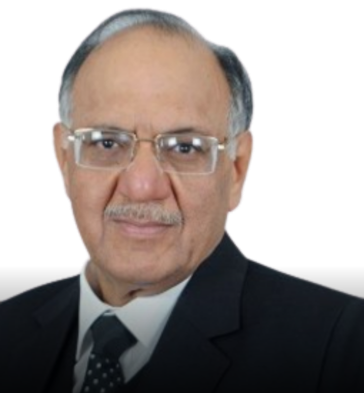
Aruneshwar Gupta
Chairman

A seasoned legal professional practicing in the Supreme Court since 1976, with extensive experience across almost all High Courts in India and significant international litigation experience, particularly in Singapore and the USA. Served as Advocate on Record and Additional Advocate General for the State of Rajasthan in the Supreme Court from 1990 to 1993, 1994 to 1999 and 2004 to 2009 successfully reducing pending litigation. In 2019, designated as a Senior Advocate by the Supreme Court. He holds a professional career, both vast and distinguished.
He Served as Honorary Secretary of the Supreme Court Bar Association (SCBA) from 1995-96 and Vice President of the Supreme Court Advocates on Record Association (SCAORA) from 1999-2001. Played a pivotal role in drafting and advocating for the Sports Acts enacted by the states of Rajasthan, Himachal Pradesh, and Uttar Pradesh, which paved the way for the IPL in cricket. Also served as chief draftsman of the ‘White Paper on Publishing and Printing of Judgments using Neutral Citation’ and contributed as a member of the ‘Supreme Court Committee on Subject Categorization.’
A prolific writer and speaker, having contributed numerous articles, presentations, and addresses in India and internationally. Read paper in CLA Conference at Hong Kong 2009, Livingston, Zambia 2019, Goa, 2023 and Malta 2025. Authored Understanding the Supreme Court Better – 151 Facts You Need to Know (2nd Edition), Shrimat Bhagwad Geeta – A Lawyers Perspective (4th Edition – 2023), Legal Revolution 5.0 (2025) – (Online Conflict Resolution, Peace Mediation, Digital Assets, Artificial Intelligence) and co-authored Supreme Court on Arbitration Law (2nd Edition). Recently (2026) published Finance Revolution 5.0 – Pro Bono Social Impact (PICS) Economy.
A voracious reader and deep thinker, a passionate advocate focusing on Online Dispute Resolution (ODR), Peace Mediation and PICS Economy.
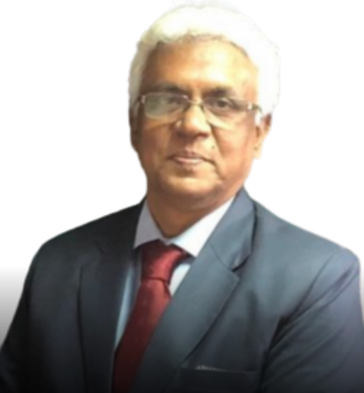
R. Santhanakrishnan
Vice Chairman

Mr. R. Santhanakrishnan is a stalwart in the legal profession, with contributions that resonate far beyond courtroom walls. Growing up in Hyderabad, his inherent leadership and organizational skills were evident as he spearheaded youth festivals, cultural events, and sports initiatives. At Osmania University, not only did he delve deep into Economics, earning both his Bachelor’s and Postgraduate degrees, but he also showcased his penchant for community involvement.
Under his guidance, the ‘Young Folks League’ literary club was born, a testament to his love for literature and community building. Early on, he displayed a fervent commitment to justice and democracy, joining the ‘Organisation for Protection of Democratic Rights’ (OPDR) and advocating for the rule of law.
His professional journey saw him take on multifaceted roles. As an employee with the provincial government, he was at the heart of the electoral process, ensuring its smooth operation. This dedication to public service ran in parallel with his academic pursuits; he earned a law degree and simultaneously championed educational and recreational initiatives, organizing tours and expeditions. His legal acumen found its ground first at the High Court of Andhra Pradesh in Hyderabad and then, scaling new heights, at the Supreme Court of India in Delhi. With expertise spanning Employment, Administrative, Election, Arbitration, and Constitutional Law, Mr. Santhanakrishnan became an indispensable asset to the Road Transport Corporation, representing them for an impressive duration.
Outside of direct legal practice, his passion interwove with sports, leading to his election as the President of the Indian Advocates Cricket Association. His vision and leadership skills flourished when he founded the Commonwealth Lawyers Cricket World Cup and nurtured international relations by organizing visits to several Commonwealth countries. The Commonwealth Lawyers Association (CLA) recognized and respected his dedication, propelling him to roles of increasing responsibility, from Vice-President to President. As President, he embarked on the ambitious ‘Mission Commonwealth Connect’, strengthening ties across the Commonwealth.
After his impactful presidency, Mr. Santhanakrishnan didn’t slow down. He honed his skills as a Mediator for which he had trained himself more than a decade and half back under trainers from UK and founded ‘NIVAARAN’, an initiative dedicated to mediation. His academic contributions continued as a faculty member at the National Judicial Academy in Bhopal. And most recently, his unparalleled dedication was recognized as he was honoured as the Honorary Life President of the Commonwealth Lawyers Association. Mr. R. Santhanakrishnan is a blend of dedication, leadership, vision, and unwavering commitment to justice and community.
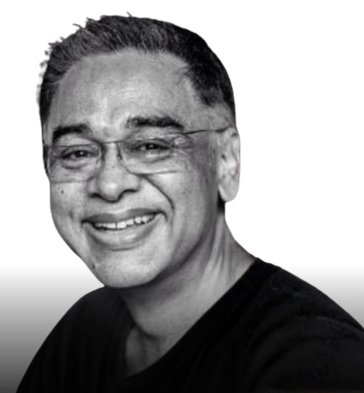
Praphul Misra
Chief Business Officer (CBO)
Praphul Misra is a technopreneur and board advisor focused on harnessing technology for transforming marketing processes. Over the last three decades, he has done pioneering work in market research, direct marketing, customer relationship management, loyalty program management, coalition loyalty programs. His client roster has included leading brands and organizations in India, the Middle East, The Americas, and Europe.
Praphul had been active in professional organizations such as the American Marketing Association (AMA), PHD Chamber of Commerce (PHDCCI), and has been a founding member of the Customer Strategy Network (CSN). He enjoys engaging with academia as a Board of Studies member and frequent guest speaker at SoM Delhi Technological University (DTU) and Apeejay School of Management. Active in the innovation and start-up space, Praphul extended his relationship with IIT Roorkee’s Business Incubator (TIDES) from being a Board member to Advisor and was similarly a Senior Advisor to the Vice Chancellor of Dr. A.P.J. Abdul Kalam Technical University (AKTU) with a focus on rekindling their Innovation Hub. He has published articles in CRM and Loyalty Marketing in world-class business journals and dailies.
In the development sector, Praphul serves as an Advisor to Literacy India, a Gurgaon-based NGO, a member of the Governing Body at EHSAS ’81 Foundation an alumni effort of Modern School, New Delhi, and a Trustee of Anath Shishu Palan Trust, an NGO that is home for 60+ orphans and runs a CBSE recognized K-12 school in rural Haridwar. He was the Program Director for the first National Law Olympiad 2023 for Law Students and Young Law Professionals under the auspices of the Society of Lawyers from India (SOLI) and Law Information Centre (LawInC).
Praphul earned an MBA in Marketing and International Business from the State University of New York at Buffalo and has a Bachelor’s degree in Electronics and Communication from the University of Roorkee (now IIT Roorkee).
Praphul is married and is blessed with two children. His wife and he are empty-nesters enjoying Bengaluru’s electrifying tech energy, fabled weather, and cultural scene.
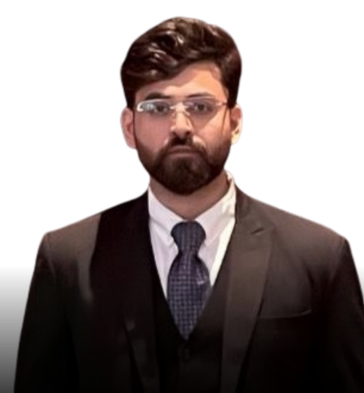
Keshav Kumar Ishwar
Associate Regulatory Officer (ARO)
Keshav Kumar Ishwar is an Advocate practising before the Supreme Court of India and various courts of law across India. His practice combines courtroom advocacy with high-level strategic advisory in regulatory and emerging technology frameworks. He has actively worked as a strategic consultant in structuring legal and regulatory models for businesses operating in complex compliance environments. His advisory work is particularly focused on virtual asset regulation, cross-border digital asset structuring, anti-money laundering frameworks, and financial regulatory compliance.
Keshav professes and advises on virtual asset laws and has worked across 22 jurisdictions globally, including India, South Asia, the Middle East, and the Caribbean. His cross-jurisdictional exposure enables him to provide harmonised regulatory strategies that align domestic compliance requirements with international standards. He is a trained mediator and a strong proponent of structured, peaceful dispute resolution. His approach integrates adversarial precision with a solutions-oriented mindset, advocating negotiated settlements wherever legally viable and commercially prudent. Keshav completed his legal education at the Vivekananda School of Law and Legal Studies.